
Using CBT to Improve Communication
Mind reading is a mental shortcut your brain takes to predict outcomes and move faster, but in communication, this shortcut often backfires. Instead of creating efficiency, it creates emotional spirals, misinterpretation, and conflict built on guesses, not truth.
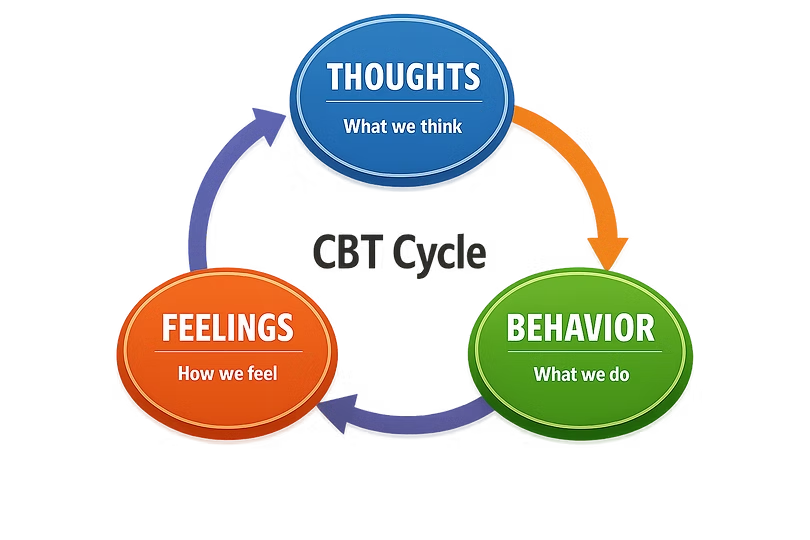
CBT teaches that thoughts influence emotions, emotions influence reactions, and reactions shape relationships. When your brain assumes it already knows someone’s intent or meaning, you stop responding to the real conversation and start reacting to an internal script written without enough data.
Why the mind reading cycle feels so real
Stress activates your nervous system before your thoughts catch up. You may notice heart racing, shallow breath, sweating, shaking, or the feeling that your thinking suddenly shut off. This response is protective in danger, but disruptive in everyday conversations, especially emotional ones.
HOW CBT INTERRUPTS THE CYCLE
CBT communication work follows a clear structure: Notice, state, ask. I noticed this, I don’t know why, help me understand.
This shift moves communication away from assumption mode and into curiosity mode. Curiosity slows escalation, keeps conversations grounded, and protects relationships from fractures that happen when assumptions speak louder than questions.
WHAT THIS LOOKS LIKE IN REAL LIFE
EXAMPLE 1: Alex texts Jordan, a friend they haven’t spoken to in months, to meet for coffee. Hours pass with no reply, and Alex thinks, They must be mad at me for being a bad friend. Alex texts again seeking verification, Are you upset with me?
The next day Jordan responds, Not at all, I was away at a retreat and my phone was off.
CBT REFRAME: Alex could have avoided the emotional spiral by pausing the assumption and waiting for the actual answer.
EXAMPLE 2: Casey notices hesitation in Morgan’s responses during a serious relationship conversation. Casey jumps to, They’re not as committed as I am. The thought becomes an accusation, Why are you hesitating? You don’t want this like I do.
Morgan replies, I want to talk through the details first, but I’m very happy with you, and I see a long future here.
CBT REFRAME: Casey could have shared the observation without accusation and asked from curiosity instead, keeping the conversation open, not defensive.
THE REAL TAKEAWAY
Mind reading isn’t a skill, it’s a trap. No one graduates from mind reading school, because it doesn’t exist. Everyone fails that class, every time. Assumptions are not facts, and communication built on assumptions creates avoidable conflict.
CBT teaches you to pause just long enough to ask the real question, not defend the imagined answer. That small shift changes everything.
At Healing & Wellness, we help adults build communication that is clearer, calmer, and more intentional, supporting both mental health and stronger relationships.